
Lithium Battery Charger: Complete Buying Guide
A lithium battery charger is designed to safely recharge lithium-based batteries using charging parameters that match their voltage, chemistry and battery-management system. Unlike a traditional lead-acid charger, a lithium-compatible charger uses a charging profile designed for lithium batteries, making it an important choice for modern cars, caravans, boats, backup power systems and solar installations.
Lithium batteries are increasingly popular because they can provide high usable capacity with relatively low weight and good cycle performance. However, choosing the wrong charger can cause charging problems and may affect battery performance or safety.
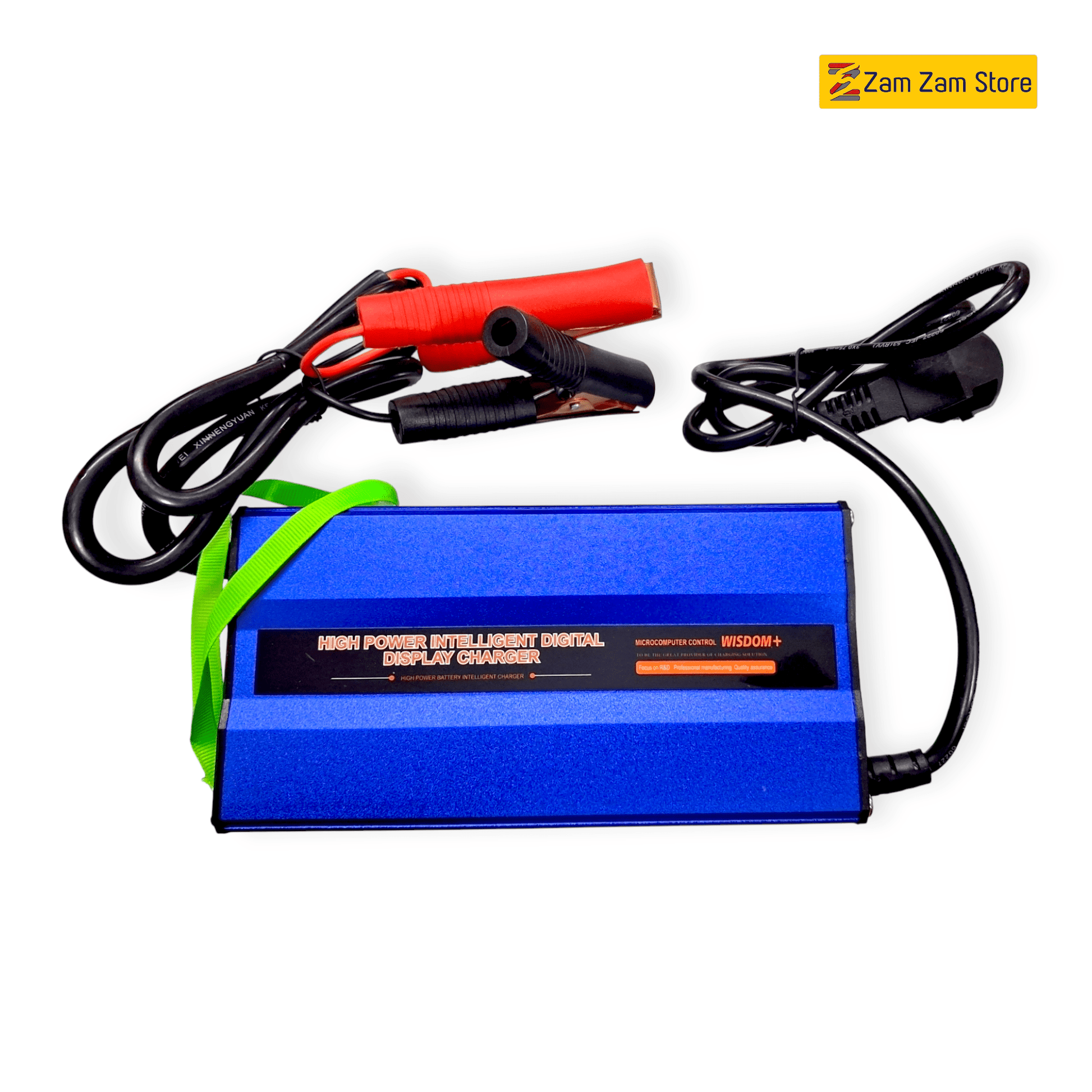
For South African drivers and vehicle owners, the right charger can be particularly useful for maintaining auxiliary batteries, camping equipment, caravans, 4x4 electrical systems and other 12V or 24V applications.
This guide explains how lithium battery chargers work, which features matter, how lithium charging differs from lead-acid charging, and what to look for before buying one.
What Is a Lithium Battery Charger?
A lithium battery charger is a charger specifically designed to recharge batteries that use lithium-based chemistry.
The charger regulates electrical current and voltage during the charging process. Depending on the battery and charger design, it may use several charging stages to bring the battery to the appropriate state of charge.
The important point is that not every lithium battery uses the same charging requirements.
For example, a lithium-ion battery used in an electronic device may have different requirements from a 12V LiFePO4 battery used in a caravan or vehicle.
Before buying a charger, always check:
-
Battery chemistry
-
Nominal battery voltage
-
Recommended charging voltage
-
Maximum charging current
-
Manufacturer's charging instructions
-
Whether the battery has an integrated BMS
A Battery Management System (BMS) can monitor battery conditions and provide protections such as overcharge, overcurrent and temperature protection. South African technical documentation for lithium iron phosphate batteries also describes BMS functions that can include protection against overcharging, overcurrent and overheating.
How Does a Lithium Battery Charger Work?
Lithium battery chargers regulate the charging process rather than simply supplying unrestricted current.
A typical lithium charging process may involve:
-
Initial or bulk charging – The charger supplies controlled current to replenish the battery.
-
Constant-voltage stage – The charger maintains the appropriate voltage while charging current gradually decreases.
-
Charge termination or reduced maintenance – Depending on the battery and charger design, charging is reduced or stopped when the appropriate charging level is reached.
The exact charging algorithm depends on the lithium chemistry and battery manufacturer.
For example, LiFePO4 batteries have specific charging requirements. Victron's documentation recommends selecting a charging profile that matches the LiFePO4 chemistry and emphasizes using the correct voltage and current for the battery.
This is why a charger labelled simply "battery charger" should not automatically be assumed to be suitable for a lithium battery.
Lithium Battery Charger vs Lead-Acid Charger
One of the most common mistakes is assuming that a charger designed for an AGM, GEL or conventional lead-acid battery will automatically work correctly with lithium.
While some modern chargers support multiple battery chemistries, the charging profiles are not necessarily interchangeable.
|
Feature |
Lithium Charger |
Lead-Acid Charger |
|
Designed for |
Lithium batteries |
Lead-acid batteries |
|
Charging profile |
Lithium-specific |
Lead-acid-specific |
|
Typical applications |
LiFePO4, lithium systems |
AGM, GEL, flooded batteries |
|
Equalisation |
Usually not required for LiFePO4 |
Some lead-acid systems may use it |
|
Float behaviour |
Depends on battery manufacturer |
Commonly used |
|
BMS compatibility |
Often designed to work with BMS-equipped batteries |
Not specifically designed around lithium BMS |
|
Best choice |
Lithium-compatible charger |
Matching lead-acid charger |
Some multi-chemistry chargers offer dedicated lithium modes. For example, certain smart chargers provide separate charging modes for flooded lead-acid, AGM, GEL and LiFePO4 batteries.
The safest approach is to follow the battery manufacturer's charging specifications rather than relying solely on the charger's marketing label.
Types of Lithium Battery Chargers
1. 12V Lithium Battery Charger
A 12V lithium battery charger is one of the most common choices for automotive and recreational applications.
It can be suitable for applications such as:
-
Caravan auxiliary batteries
-
Camping systems
-
12V solar storage
-
Marine equipment
-
Recreational vehicles
-
Auxiliary vehicle batteries
However, "12V" generally refers to the battery's nominal system voltage. The charger's actual charging voltage will be higher than the nominal battery voltage.
2. 24V Lithium Battery Charger
A 24V charger is designed for a 24V battery system.
It may be used in:
-
Larger recreational vehicles
-
Commercial equipment
-
Backup power systems
-
Some electric vehicles and machinery
-
Solar storage systems
Never substitute a charger simply because its connector fits. The charger must match the battery system voltage and chemistry.
3. LiFePO4 Battery Charger
LiFePO4, or lithium iron phosphate, is a widely used lithium chemistry for deep-cycle applications.
You may encounter LiFePO4 batteries in:
-
Caravans
-
Camping systems
-
Solar installations
-
Boats
-
Backup power systems
-
4x4 auxiliary systems
A LiFePO4 charger should have an appropriate charging profile for that chemistry.
4. Smart Lithium Battery Charger
A smart charger automatically manages charging according to its programmed charging profile.
Depending on the model, features may include:
-
Automatic charging stages
-
Battery-status monitoring
-
Temperature protection
-
Short-circuit protection
-
Reverse-polarity protection
-
Digital displays
-
Bluetooth connectivity
-
Multiple battery chemistry settings
These features can make charging easier, particularly for users who want a charger that requires less manual adjustment.
Benefits of Using a Lithium Battery Charger
Better Compatibility
A lithium-specific charging profile is designed around the electrical characteristics of the supported battery chemistry.
Controlled Charging
The charger regulates current and voltage instead of providing uncontrolled power.
Useful for Deep-Cycle Applications
Lithium batteries are commonly used in applications where batteries are regularly charged and discharged, such as camping and solar systems.
Convenient Maintenance
Many modern smart chargers can monitor the battery and automatically manage the charging process.
Safety Features
Quality chargers can include protections against conditions such as:
-
Over-voltage
-
Excessive current
-
Short circuits
-
Reverse polarity
-
Excessive temperature
Some South African procurement specifications for lithium battery charging equipment explicitly identify features such as overcharge protection, short-circuit protection and temperature monitoring.
Pros and Cons of Lithium Battery Chargers
Pros
-
Designed specifically for lithium battery chemistry
-
Controlled charging process
-
Available in 12V and 24V versions
-
Many models support LiFePO4 batteries
-
Smart models can automate charging
-
Useful for automotive, caravan and solar applications
-
Can include multiple safety protections
Cons
-
Can cost more than basic conventional chargers
-
Not every lithium charger supports every lithium chemistry
-
Incorrect voltage selection can cause charging problems
-
Some batteries require manufacturer-specific charging settings
-
A charger may need to be paired correctly with the battery's BMS
How to Choose the Right Lithium Battery Charger
Choosing the correct charger is more important than simply looking for the highest charging current.
1. Check Battery Voltage
First determine whether your battery system is:
-
12V
-
24V
-
36V
-
48V
-
Another voltage specified by the manufacturer
The charger must be compatible with the battery's system voltage.
Victron specifically advises ensuring that the charger supplies the correct current and voltage and gives the example that a 24V charger should not be used for a 12V battery.
2. Identify the Battery Chemistry
Find out whether your battery is:
-
LiFePO4
-
Lithium-ion
-
Lithium NMC
-
Another lithium chemistry
Do not assume that a charger labelled "Li-ion" is automatically appropriate for every lithium battery.
3. Check Recommended Charging Current
Battery capacity is normally measured in amp-hours (Ah).
For example, suppose you have a 100Ah battery and the manufacturer recommends a maximum charging current of 50A. A charger capable of 20A would generally charge more slowly than a 50A charger, assuming all other specifications are appropriate.
However, the battery manufacturer's recommended charging current should take priority.

4. Look for the Correct Charging Profile
A good lithium charger should either have a dedicated lithium profile or allow the charging parameters to be configured according to the battery manufacturer's specifications.
Important parameters can include:
-
Absorption voltage
-
Absorption time
-
Float voltage, if applicable
-
Maximum charging current
-
Temperature-related settings
5. Consider Safety Features
Look for reputable equipment with appropriate protective features.
Useful features include:
-
Over-voltage protection
-
Over-current protection
-
Reverse-polarity protection
-
Short-circuit protection
-
Temperature monitoring
-
Automatic shut-off or charge control
6. Consider the Environment
South Africa has a wide range of climates, from hot inland regions to coastal environments.
If the charger will be used in a garage, caravan, workshop or outdoor electrical installation, consider:
-
Ventilation
-
Dust protection
-
Moisture resistance
-
Operating-temperature range
-
Cable length
-
Housing quality
Always operate the charger within its manufacturer's specified conditions.
Can You Use a Regular Car Battery Charger on a Lithium Battery?
Not necessarily.
A conventional car battery charger designed for flooded, AGM or GEL lead-acid batteries should not automatically be used with a lithium battery.
Some modern chargers support both lead-acid and lithium batteries through separate modes. In that case, the correct lithium mode should be selected according to the battery manufacturer's instructions.
Avoid using special lead-acid functions such as reconditioning or equalisation unless the lithium battery manufacturer specifically states that the function is appropriate.
The charging profile matters because lithium batteries have different electrical characteristics from lead-acid batteries.
How Long Does a Lithium Battery Take to Charge?
Charging time depends on several factors:
-
Battery capacity
-
Starting state of charge
-
Charger output
-
Battery charging limit
-
Temperature
-
Battery-management system
-
Charging efficiency
A simple theoretical estimate is:
Charging time ≈ Battery capacity (Ah) ÷ Charger current (A)
For example, a 100Ah battery charged at 20A would have a basic theoretical charging time of about five hours.
In practice, the actual time can be longer because charging is not perfectly linear and the charging current may decrease as the battery approaches its target voltage.
Always use the battery manufacturer's specifications when estimating real charging time.
Common Lithium Battery Charging Mistakes
Using the Wrong Voltage
This is one of the most serious mistakes.
A charger must match the battery's system voltage.
Selecting the Wrong Chemistry
A charger may have multiple modes. Selecting the wrong mode can result in inappropriate charging parameters.
Ignoring the Manufacturer's Instructions
The battery manufacturer's manual should be the first reference for charging voltage, current and temperature limits.
Choosing a Charger Based Only on Amps
A high-current charger is not automatically better.
The battery must be rated to accept that charging current.
Using Damaged Equipment
Do not use a charger with damaged cables, exposed conductors, cracked housing or damaged connectors.
Charging in Unsuitable Conditions
Keep the charger and battery within their specified operating temperature and environmental limits.
Assuming Every Lithium Battery Is the Same
"Lithium" describes a broad family of battery chemistries. Charging requirements can differ considerably between products.
Lithium Battery Charging Safety Tips
Battery charging should always be treated as an electrical safety task.
Follow these basic precautions:
-
Read the battery and charger manuals before connecting them.
-
Confirm the voltage and chemistry are compatible.
-
Use the supplied or manufacturer-approved cables where required.
-
Inspect cables and connectors before use.
-
Keep charging equipment properly ventilated.
-
Do not use visibly damaged batteries.
-
Stop charging if the battery or charger behaves abnormally.
-
Keep equipment away from water unless specifically designed for wet environments.
-
Do not modify the charger or battery connections.
-
Follow the manufacturer's temperature limits.
Lithium battery technology requires controlled charging. Research from the U.S. Department of Energy notes that lithium-ion charging is deliberately controlled to reduce risks associated with undesirable battery reactions.
Lithium Battery Charger Buying Guide for South Africa
When shopping in South Africa, consider the following checklist.
For a 12V Caravan Battery
Look for:
-
12V-compatible output
-
LiFePO4 charging profile if applicable
-
Appropriate current rating
-
Temperature protection
-
Reliable connectors
-
Suitable AC input for local electrical supply
For a 4x4 Auxiliary Battery
Prioritise:
-
Correct battery chemistry
-
Appropriate charging current
-
Durable construction
-
Protection features
-
Compact size if portability matters
For a Solar Storage Battery
Consider whether you actually need a standalone AC charger or whether the system should use a compatible solar charge controller.
The charger or controller should be configured for the battery chemistry and manufacturer's recommended settings.
For Occasional Home Use
A smart charger with automatic lithium detection or a dedicated lithium mode can be convenient.
Look for clear instructions and simple status indicators rather than buying the most powerful model available.
Who Should Buy This?
A lithium battery charger can be a good choice for:
-
Caravan owners
-
4x4 enthusiasts
-
Camping users
-
Solar-system owners
-
Boat owners
-
Workshop users
-
People maintaining lithium auxiliary batteries
-
Anyone who owns a compatible LiFePO4 battery
It may not be necessary if your battery already has an integrated charging system that meets your requirements.
How to Maintain a Lithium Battery Charger
A good charger requires relatively little maintenance, but basic care helps.
Keep Connections Clean
Dust, dirt and corrosion can affect electrical connections.
Store It Properly
When not being used, store the charger according to the manufacturer's instructions.
Inspect Cables
Look for:
-
Cracks
-
Cuts
-
Loose connectors
-
Burn marks
-
Damaged insulation
Keep Ventilation Open
Do not cover ventilation openings while the charger is operating.
Check Settings
If the charger is configurable, periodically confirm that the correct battery chemistry and voltage settings are selected.
5 Internal Linking Opportunities
If publishing this article on an automotive website, consider linking to these related pages:
-
Best Battery Charger – Link from the buying-guide section.
-
Smart Battery Charger – Link when explaining automatic charging.
-
AGM Battery Charger – Link from the lithium vs lead-acid comparison.
-
Best Car Battery Charger – Link from the automotive applications section.
-
Jump Starter Buying Guide – Link from the section discussing vehicle emergency equipment.
These links can help build a strong automotive battery content cluster and improve topical relevance.
3 External Authority Sources to Reference
For additional credibility, consider referencing:
-
U.S. Department of Energy – Battery charger and lithium-ion battery information.
-
Victron Energy – Technical guidance on LiFePO4 charging profiles and recommended charger settings.
-
South African government procurement/technical documentation – Useful for South African electrical and lithium battery specifications.
Image Ideas and SEO-Friendly Alt Text
Image 1: Lithium Charger With 12V Battery
Alt text: lithium battery charger connected to 12V LiFePO4 battery
Image 2: Smart Lithium Battery Charger
Alt text: smart lithium battery charger with digital charging display
Image 3: Lithium vs Lead-Acid Charger
Alt text: lithium battery charger compared with lead-acid battery charger
Image 4: LiFePO4 Charging Setup
Alt text: LiFePO4 lithium battery charging setup for caravan
Image 5: Lithium Charger Buying Guide
Alt text: lithium battery charger buying guide for South Africa
FAQ: Lithium Battery Charger
1. Can I use a normal charger for a lithium battery?
Not always. A charger should have a charging profile compatible with the specific lithium battery chemistry. Some multi-chemistry chargers support lithium batteries through a dedicated lithium setting.
2. What charger do I need for a 12V lithium battery?
You need a charger specifically compatible with the battery's chemistry and 12V nominal system. For a LiFePO4 battery, choose a charger with an appropriate LiFePO4 charging profile and the charging current recommended by the battery manufacturer.
3. Is a lithium battery charger different from an AGM charger?
Yes. Lithium and AGM batteries have different charging characteristics. Some smart chargers support both, but they normally use different charging modes for each chemistry.
4. How long does a lithium battery take to charge?
It depends on the battery capacity, charger output, starting charge level and charging limits. As a basic estimate, divide battery capacity in Ah by charger current in A, then allow additional time for the charging process to taper.
5. Is LiFePO4 the same as lithium-ion?