
How to Inflate Car Tyres Correctly
Introduction
Knowing how to inflate car tyres correctly is one of the most important vehicle maintenance skills every driver should learn. Correct tyre pressure improves safety, extends tyre life, enhances fuel efficiency, and provides better handling on South African roads.
The direct answer is simple: check your vehicle manufacturer's recommended tyre pressure, use a reliable pressure gauge, inflate the tyres to the specified PSI or kPa, and check the pressure when the tyres are cold.

Many drivers either overinflate or underinflate their tyres without realizing the risks involved. In this guide, you'll learn the correct inflation process, common mistakes to avoid, recommended tools, and expert maintenance tips specifically relevant to South African driving conditions.
Why Correct Tyre Pressure Matters
Tyres are the only part of your vehicle that touches the road. Even a small pressure difference can affect performance.
Benefits of Properly Inflated Tyres
-
Improved road safety
-
Better braking performance
-
Enhanced steering control
-
Longer tyre lifespan
-
Better fuel economy
-
Reduced tyre wear
-
Improved ride comfort
-
Lower risk of tyre blowouts
Risks of Underinflated Tyres
When tyre pressure is too low:
-
Tyres wear faster on the edges
-
Fuel consumption increases
-
Vehicle handling becomes unstable
-
Heat builds up inside the tyre
-
Blowout risk increases
Risks of Overinflated Tyres
When tyres contain too much air:
-
Centre tread wears prematurely
-
Ride becomes harsh
-
Reduced grip on the road
-
Increased susceptibility to impact damage
-
Longer stopping distances in some conditions
How to Inflate Car Tyres Correctly
Step 1: Find the Recommended Tyre Pressure
Never rely on the pressure printed on the tyre sidewall. That number indicates the tyre's maximum pressure, not the recommended operating pressure.
Instead, check:
-
Driver's door jamb sticker
-
Vehicle owner's manual
-
Fuel flap sticker (on some vehicles)
Pressure is usually displayed in:
-
PSI (Pounds per Square Inch)
-
kPa (Kilopascals)
-
Bar
In South Africa, kPa is commonly used, although many gauges also display PSI.
Step 2: Check Tyres When Cold
For accurate readings:
-
Check tyres before driving
-
Or wait at least three hours after driving
Driving heats the tyres and temporarily increases pressure readings.
Step 3: Use a Reliable Tyre Pressure Gauge
A quality pressure gauge provides accurate measurements.
Common options include:
-
Digital tyre gauges
-
Dial gauges
-
Pencil-style gauges
Digital gauges generally offer the highest accuracy and easiest readability.
Step 4: Remove the Valve Cap
Unscrew the valve cap carefully and place it somewhere safe.
Avoid losing valve caps because they help prevent dirt and moisture from entering the valve stem.
Step 5: Measure Current Pressure
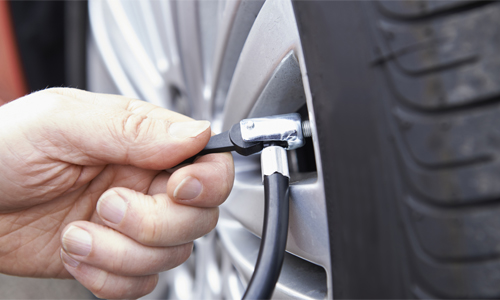
Press the gauge firmly onto the valve stem.
Record the reading for each tyre.
Compare it with the manufacturer's recommended pressure.
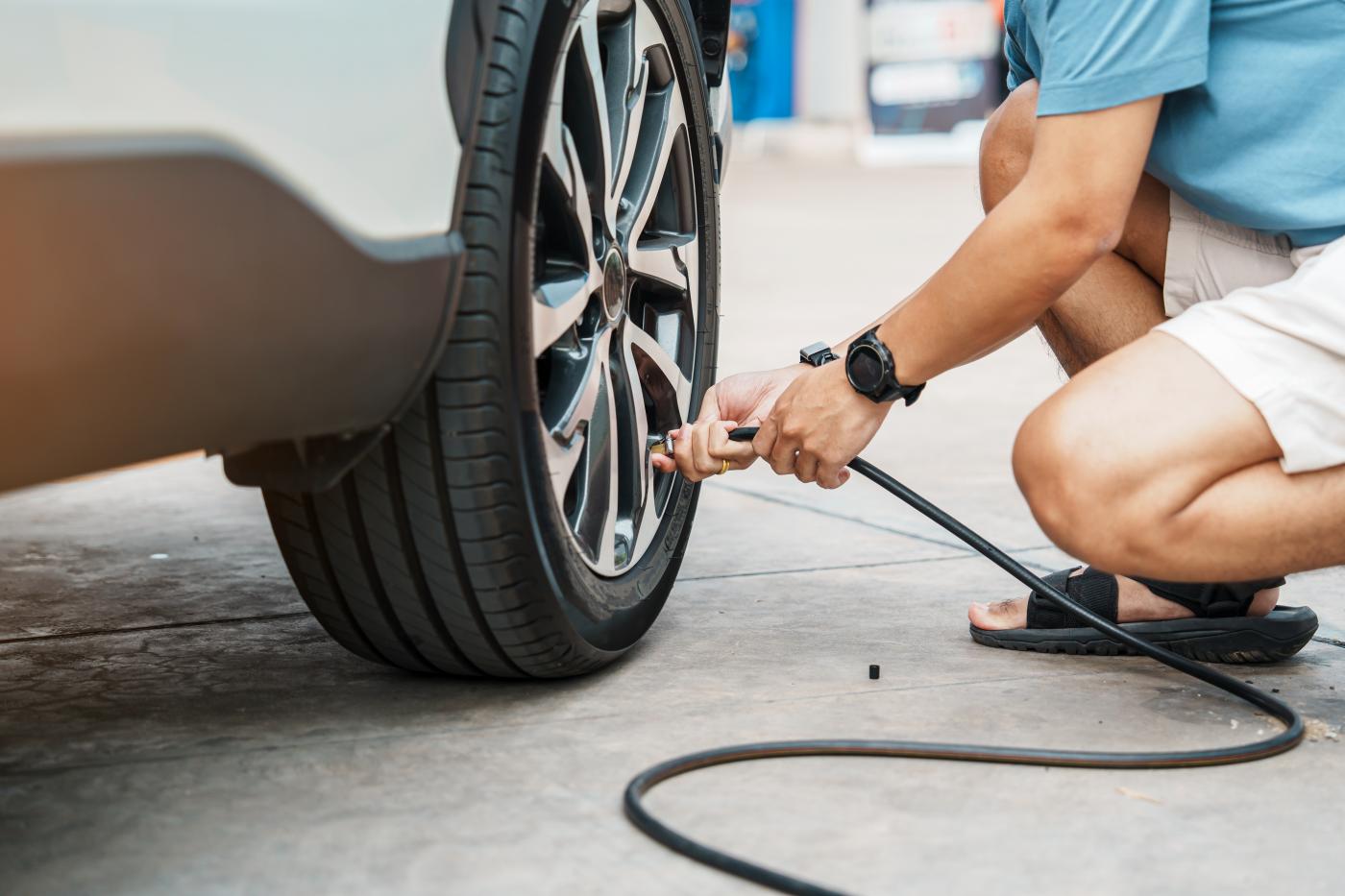
Step 6: Inflate the Tyre
Attach the air hose securely.
Add air in short bursts.
Check pressure frequently to avoid overinflation.
Continue until you reach the recommended pressure.
Step 7: Recheck Pressure
After inflating:
-
Remove the air hose
-
Recheck using your gauge
-
Adjust if necessary
Even service station pumps may not always provide perfectly accurate readings.
Step 8: Replace Valve Caps
Securely reinstall each valve cap.
This simple step helps maintain tyre health over time.
Recommended Tyre Pressure Guide
The correct pressure varies depending on the vehicle.
|
Vehicle Type |
Typical Front Pressure |
Typical Rear Pressure |
|
Small Hatchback |
200–240 kPa |
200–240 kPa |
|
Sedan |
220–250 kPa |
220–260 kPa |
|
SUV |
230–280 kPa |
230–300 kPa |
|
Bakkie (Unloaded) |
220–260 kPa |
220–260 kPa |
|
Bakkie (Loaded) |
240–300 kPa |
260–350 kPa |
Always follow your vehicle manufacturer's recommendations rather than generic figures.
How Often Should You Check Tyre Pressure?
Experts recommend checking tyre pressure:
-
At least once per month
-
Before long-distance travel
-
Before carrying heavy loads
-
After major temperature changes
South Africa experiences varying climate conditions that can affect tyre pressure.
For example:
-
Cold winter mornings can lower pressure
-
Hot summer temperatures can increase pressure
Regular monitoring helps maintain consistent performance.
Best Time to Inflate Tyres
The ideal time is:
-
Early morning
-
Before driving
-
When tyres are cold
Avoid checking pressure immediately after highway driving because heat expansion can affect readings.
Common Tyre Inflation Mistakes
Many drivers unknowingly make mistakes that shorten tyre life.
1. Using Sidewall Pressure
The sidewall shows maximum pressure, not recommended operating pressure.
2. Ignoring Spare Tyres
Many spare tyres are flat when needed because owners never check them.
Check the spare every month.
3. Checking Only One Tyre
Every tyre should be checked individually.
Pressure can vary between tyres.
4. Forgetting Seasonal Changes
Temperature fluctuations affect tyre pressure significantly.
5. Overinflating for Fuel Savings
Some drivers add extra pressure believing it improves fuel economy.
Excessive pressure reduces grip and accelerates centre tread wear.
Tyre Pressure and Fuel Efficiency
Correct tyre pressure can significantly improve fuel economy.
Underinflated tyres create:
-
Higher rolling resistance
-
Increased engine workload
-
Greater fuel consumption
For South African motorists facing rising fuel costs, maintaining correct tyre pressure is one of the simplest ways to reduce expenses.
Tyre Pressure for Long Road Trips
Before travelling between cities or provinces:
Perform These Checks
-
Inspect tread depth
-
Check tyre pressure
-
Examine sidewalls for damage
-
Verify spare tyre condition
-
Confirm valve caps are fitted
Adjust for Heavy Loads
When carrying:
-
Camping gear
-
Luggage
-
Trailers
-
Passengers
Manufacturers may recommend higher rear tyre pressures.
Always consult the owner's manual.
Tyre Pressure Monitoring Systems (TPMS)
Modern vehicles often include TPMS technology.
Benefits of TPMS
-
Alerts drivers to low pressure
-
Improves safety
-
Helps prevent premature tyre wear
-
Supports fuel efficiency
However, TPMS should not replace manual inspections.
Regular pressure checks remain important.
Tools You Need for Proper Tyre Inflation
Having the right tools makes maintenance easier.
Essential Tools
-
Digital tyre pressure gauge
-
Portable air compressor
-
Valve caps
-
Tyre inflator hose
-
Tyre tread depth gauge
Optional Tools
-
Battery-powered compressor
-
TPMS scanner
-
Emergency tyre repair kit
Buying Guide: Choosing a Tyre Inflator
A quality tyre inflator can save time and improve accuracy.
What to Look For
Accuracy
Choose inflators with accurate digital pressure readings.
Portability
Compact models fit easily into the boot.
Power Source
Options include:
-
12V vehicle socket
-
Rechargeable battery
-
Household power
Inflation Speed
Higher airflow reduces inflation time.
Auto Shut-Off
Automatically stops when the desired pressure is reached.
Pros of Owning a Tyre Inflator
-
Convenient
-
Saves trips to fuel stations
-
Useful during emergencies
-
Improves tyre maintenance
Cons
-
Initial purchase cost
-
Requires storage space
-
Some budget models lack accuracy
Who Should Buy This?
A tyre inflator is especially useful for:
-
Daily commuters
-
Long-distance drivers
-
Families
-
Fleet operators
-
Off-road enthusiasts
-
Rural motorists
-
Holiday travellers
If you regularly drive long distances across South Africa, owning a tyre inflator can be a valuable investment.
South African Driving Conditions and Tyre Care
South African roads present unique challenges.
These include:
-
High summer temperatures
-
Long-distance highway travel
-
Gravel roads
-
Potholes
-
Heavy holiday traffic
Because of these conditions, tyre maintenance should never be neglected.
Regular inflation checks improve safety and reduce unexpected tyre failures.
Expert Tips for Longer Tyre Life
Follow these professional recommendations:
-
Check pressure monthly.
-
Rotate tyres according to manufacturer schedules.
-
Maintain wheel alignment.
-
Avoid overloading your vehicle.
-
Replace damaged valve stems.
-
Inspect tyres before long trips.
-
Replace tyres when tread depth becomes unsafe.
Small maintenance habits can add thousands of kilometres to tyre life.
Frequently Asked Questions
1. What is the correct tyre pressure for my car?
The correct pressure is listed on the driver's door sticker, owner's manual, or fuel flap. It varies by vehicle model.
2. Should I inflate tyres to the pressure shown on the tyre sidewall?
No. The sidewall shows maximum pressure, not the recommended operating pressure.
3. How often should I check tyre pressure?
At least once a month and before any long journey.
4. Can hot weather affect tyre pressure?
Yes. High temperatures increase tyre pressure, while cold temperatures reduce it.
5. Is it safe to drive with underinflated tyres?
No. Underinflated tyres increase wear, reduce handling performance, and raise the risk of tyre failure.