
Best Jump Starter for Petrol Car in South Africa
A jump starter for a petrol car is one of the most useful emergency accessories you can keep in your vehicle. Unlike traditional jumper cables, a portable jump starter contains its own battery, allowing you to start a car without needing another vehicle.
For most petrol cars in South Africa, a compact 12V lithium-ion jump starter with sufficient starting current, safety protection and reliable clamps is an excellent choice. The right model depends on your engine size, battery condition, vehicle type and how often you expect to use it.
Whether you drive a small hatchback, family sedan, crossover or petrol SUV, choosing the correct jump starter can save time when your battery goes flat.
What Is the Best Jump Starter for a Petrol Car?
The best jump starter for a petrol car is a reliable 12V portable booster with enough starting power for your engine, good-quality battery clamps, reverse-polarity protection and sufficient capacity for emergencies.
For many everyday petrol vehicles, a unit rated around 600–1,000A peak current can provide a useful balance between portability and starting capability. Larger petrol engines may benefit from a more powerful model.
However, peak amperage should not be the only specification you consider. Build quality, safety features, clamp quality, battery capacity and the manufacturer's recommended engine size are equally important.
Why Carry a Jump Starter in Your Car?
A flat battery can happen for several reasons. Leaving headlights or interior lights on, an ageing battery, extreme temperatures or an electrical problem can all prevent your vehicle from starting.
A portable jump starter gives you another option when another vehicle is not available.
Main benefits include:
-
No second vehicle is required.
-
It is easier to carry than traditional booster equipment.
-
Modern lithium models are relatively compact.
-
Many models include USB charging ports.
-
Some have built-in LED emergency lights.
-
They can be useful during road trips and long-distance travel.
-
A good unit can be stored in an emergency car kit.
For South African drivers who regularly travel long distances, keeping a charged jump starter in the vehicle can be particularly practical.
Best Jump Starter for Petrol Car: What to Look For
Not every battery booster is suitable for every vehicle. Before buying one, check the following specifications.
1. Starting Current
Starting current is one of the most important specifications.
A small petrol hatchback generally requires less starting power than a large petrol SUV. Instead of choosing a model based purely on the highest advertised peak amperage, check the manufacturer's recommended engine capacity.
For example:
|
Vehicle type |
Suggested jump-starter range* |
|
Small petrol hatchback |
400–800A |
|
Compact sedan |
600–1,000A |
|
Medium petrol SUV |
800–1,500A |
|
Large petrol engine |
1,000A+ |
*These are general buying guidelines rather than guarantees. Always follow the jump starter manufacturer's engine-size recommendations.
A larger rating provides additional headroom, but buying the biggest unit available is not always necessary.
2. 12V Compatibility
Most passenger cars use a 12V electrical system. Make sure the jump starter is designed for a 12V vehicle before purchasing.
Never assume that a jump starter designed for a particular application will automatically be suitable for every vehicle.
Check your vehicle manual and the product specifications if you are unsure.
3. Battery Capacity
Battery capacity determines how much energy the jump starter stores.
A larger capacity can potentially provide more starting attempts or allow you to use the device for other functions. However, battery capacity alone doesn't determine whether a jump starter can start your vehicle.
A good unit should combine suitable capacity with adequate starting performance.
4. Safety Protection
Safety features are extremely important because jump-starting involves a vehicle battery and electrical connections.
Look for features such as:
-
Reverse-polarity protection
-
Short-circuit protection
-
Over-current protection
-
Over-temperature protection
-
Overcharge protection
-
Spark-resistant or protected clamps
These features can reduce the likelihood of mistakes causing damage to the equipment or vehicle.
5. Quality of the Clamps and Cables
The jump starter itself may receive most of the attention, but the clamps are equally important.
Look for strong clamps with good insulation and cables that feel durable. The clamps should make secure contact with the appropriate battery terminals.
Avoid extremely cheap products with thin cables, weak springs or poorly constructed connectors.
6. Size and Portability
A jump starter should be small enough to keep in your car without becoming a burden.
Lithium-ion models are generally much easier to store than older, bulky booster packs.
A compact design can be especially useful if your vehicle has limited boot space.
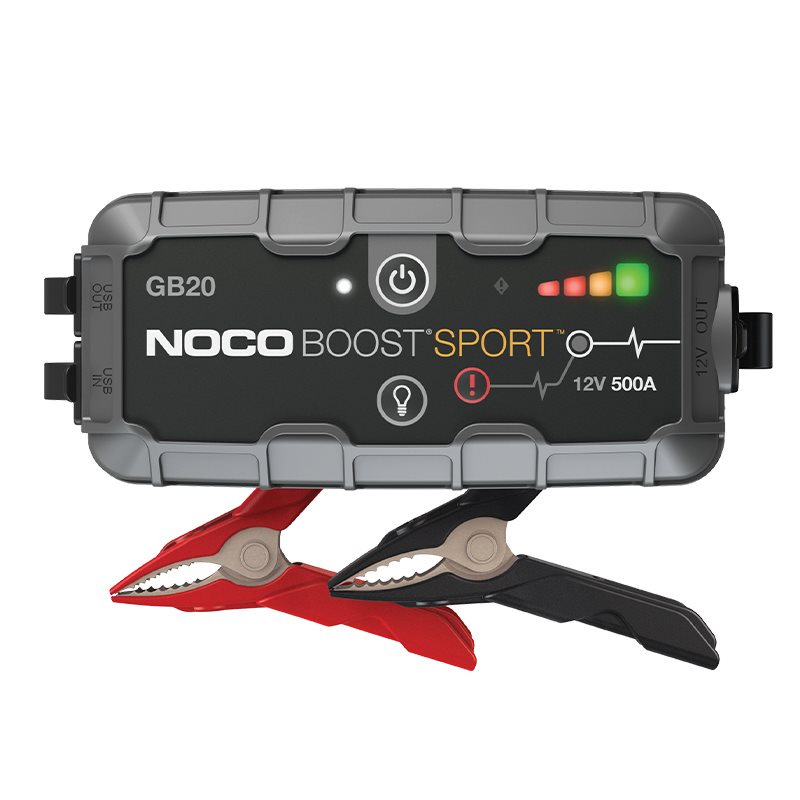
7. USB and Emergency Features
Many modern portable jump starters do more than start cars.
Depending on the model, you may get:
-
USB-A charging
-
USB-C charging
-
LED flashlight
-
Emergency light
-
Battery indicator
-
Carrying case
-
Multiple charging ports
These features are useful, but they should be secondary to starting performance and safety.
Petrol vs Diesel: Does Engine Type Matter?
Yes.
Petrol engines generally require less starting power than diesel engines of similar size because diesel engines typically require more effort to crank and have different starting requirements.
This means a jump starter that is suitable for a small petrol car may not be the right choice for a diesel SUV or truck.
If you own both petrol and diesel vehicles, choose a model specifically rated for the largest and most demanding engine you intend to support.
Lithium-Ion vs Traditional Jump Starters
Modern portable jump starters commonly use lithium battery technology.
Lithium jump starters
Pros:
-
Compact
-
Lightweight
-
Easy to store
-
Can include USB charging
-
Convenient for everyday drivers
-
Usually easier to carry
Cons:
-
Need regular charging
-
Battery performance can decline with age
-
Very cheap models may have poor-quality cells or electronics
Traditional booster packs
Pros:
-
Often larger
-
Can provide substantial stored energy
-
Some designs are intended for heavier-duty use
Cons:
-
Heavier
-
Less convenient to transport
-
Usually take up more storage space
For a typical passenger petrol car, a quality lithium jump starter is often the more convenient option.
How to Choose the Right Jump Starter for Your Car
Use this simple process before buying.
Step 1: Check Your Engine Size
Find your petrol engine size in the owner's manual or vehicle documentation.
A 1.0-litre hatchback and a 3.5-litre petrol SUV have different starting requirements.
Step 2: Check the Manufacturer's Rating
Look for the recommended petrol engine capacity rather than relying exclusively on peak amperage.
If your car has a 2.0-litre petrol engine, choose a jump starter whose manufacturer specifically states that it supports engines of that size or larger.
Step 3: Check the Vehicle Voltage
Confirm that your car uses a 12V starting system.
Step 4: Prioritise Safety
Choose a model with proper protection against incorrect connections and electrical faults.
Step 5: Consider Your Driving Habits
If you frequently travel between cities, go camping or drive through remote areas, additional capacity and durable construction may be worthwhile.
For mainly urban driving, a compact model may be sufficient.
Best Features for South African Drivers
South Africa offers a wide range of driving conditions, from urban commuting to long highway trips.
When selecting an emergency car battery booster, consider:
Long-distance travel
If you regularly drive long distances, portability and battery capacity become more important.
Heat exposure
Avoid leaving lithium battery equipment permanently exposed to excessive heat. Store your jump starter according to the manufacturer's instructions and keep it protected from direct sunlight where possible.
Easy storage
A carrying case helps keep the jump starter, cables and accessories together.
Power-bank functionality
USB charging can be useful during road trips, particularly when you need to recharge a phone.
Who Should Buy This?
A portable jump starter is particularly useful for:
-
Daily commuters
-
Drivers with older car batteries
-
People who travel long distances
-
Road-trip drivers
-
Families with multiple vehicles
-
Drivers who frequently travel away from populated areas
-
Anyone building a complete emergency car kit
It may be less important for someone who drives very short distances and always has easy access to roadside assistance, although it can still provide an additional emergency option.
Buying Guide: How Much Jump-Starter Power Do You Need?
Don't automatically choose the product with the biggest number on the box.
Instead, match the unit to your vehicle.
Small petrol cars
A compact unit can be convenient for smaller engines. Prioritise portability, safety and good clamps.
Family sedans
A mid-range jump starter provides a useful combination of starting capability and portability.
Petrol SUVs
Consider a more powerful model with a higher manufacturer-rated engine capacity.
Multiple vehicles
If the same jump starter will be used for different vehicles, select a model rated for the largest petrol engine in your household.
Common Jump Starter Mistakes to Avoid
Buying based only on peak amps
A huge peak-current figure does not automatically mean better overall quality.
Look at the complete specification, including recommended engine size, battery capacity, safety features and warranty.
Forgetting to recharge it
A jump starter cannot help if its internal battery is empty.
Check its charge periodically and recharge it according to the manufacturer's instructions.
Storing it in extreme heat
Portable lithium batteries should be stored according to the manufacturer's temperature recommendations.
Avoid leaving the unit exposed to unnecessary heat for long periods.
Using damaged cables
Inspect the clamps and cables before use. If they are damaged, follow the manufacturer's safety guidance and replace the equipment if necessary.
Ignoring the vehicle manual
Always follow your vehicle manufacturer's instructions for jump-starting.
Some vehicles have dedicated jump-start terminals or special procedures.
How to Use a Portable Jump Starter Safely
The exact procedure depends on the vehicle and jump starter, so follow the instructions supplied with your equipment.
In general:
-
Park the vehicle safely and switch off electrical accessories.
-
Make sure the jump starter is sufficiently charged.
-
Identify the correct battery terminals or designated jump-start points.
-
Connect the clamps exactly as instructed by the manufacturer.
-
Turn on the jump starter if required.
-
Attempt to start the vehicle according to the product instructions.
-
Once the engine starts, disconnect the equipment in the recommended order.
-
Inspect the equipment and recharge it when appropriate.
If the vehicle does not start after the recommended attempts, don't repeatedly crank the engine. There may be a deeper battery, starter, fuel, ignition or electrical problem.
What If the Jump Starter Doesn't Start the Car?
A jump starter cannot solve every starting problem.
If the engine still won't start, possible causes include:
-
Completely failed battery
-
Damaged battery terminals
-
Faulty starter motor
-
Alternator problems
-
Fuel-system problems
-
Ignition faults
-
Electrical faults
Check for obvious issues, but avoid repeatedly attempting to start a vehicle when there is a suspected mechanical or electrical fault.
If you're unsure, contact a qualified mechanic or roadside assistance service.
Pros and Cons of Portable Jump Starters
Pros
-
Convenient
-
No second car required
-
Compact
-
Easy to store
-
Useful during emergencies
-
Many models charge mobile devices
-
Can be included in an emergency car kit
Cons
-
Requires regular charging
-
Quality varies significantly between products
-
Battery capacity decreases over time
-
Very cheap models may have unreliable components
-
Incorrect use can create safety risks
5 Best Buying Tips
Before purchasing a petrol car jump starter, remember these five points:
-
Match the model to your engine size.
-
Choose a reputable manufacturer.
-
Prioritise safety protection.
-
Check clamp and cable quality.
-
Choose a size you will actually keep in your vehicle.
A reliable mid-range product that is properly rated for your vehicle is usually more useful than an oversized product with specifications you don't need.
FAQ: Best Jump Starter for Petrol Car
1. What size jump starter do I need for a petrol car?
It depends on your engine size and the manufacturer's recommendation. Smaller petrol engines can generally use compact jump starters, while larger engines require models rated for greater engine capacity and starting demand.
2. Is 600A enough to start a petrol car?
It can be sufficient for some smaller petrol vehicles, but the answer depends on the specific vehicle and battery condition. Always check the jump starter manufacturer's recommended engine capacity before buying.
3. Are lithium jump starters good for petrol cars?
Yes. Lithium jump starters are popular because they are compact, lightweight and convenient. They can be particularly suitable for everyday passenger vehicles when correctly rated for the engine.
4. Can a jump starter damage a car battery?
Incorrect use of electrical equipment can cause problems. Follow the jump starter manufacturer's instructions and your vehicle owner's manual carefully. Safety features such as reverse-polarity and short-circuit protection are desirable.